
Understanding Snoring & Sleep Apnea
Snoring is ANNOYING!
Snoring is annoying, it doesn’t allow the snorer nor the bed partner to rest and have good quality sleep. Many adults snore occasionally. As we grow older, the prevalence of snoring increases. Very often snoring can be a sign of something more serious. A sleep study interpreted by a board certified sleep physician will help determine if a person has primary snoring or other life threatening conditions like Obstructive Sleep Apnea (OSA). A person who primarily snored can develop sleep apnea over time.
Snoring is the sound created by a “turbulent” airflow. The airflow becomes turbulent when the area at the back of the throat becomes obstructed, narrowed or crowded during sleep. Air passing through this smaller opening causes the soft tissues (the uvula and soft palate) to vibrate, which in turn can cause the sounds of snoring.
Causes of Snoring
- Nasal congestion: Both allergies and colds can make you stuffy.
- Anatomical features can impact how air moves through the mouth or nose:
- Mouth: enlargement of the tongue, tonsils, or soft palate.
- Nose: nasal polyps or a deviated septum.
- Jaw size: a small upper or lower jaw cause narrowing of the airway and snoring.
- Pregnancy: Snoring will often increase during pregnancy as a result of weight gain, swelling and congestion.
- Sedatives and medications: some medicines, narcotics, alcohol, muscle relaxants and many sleep aids cause the muscles on the throat to relax and vibrate.
- Sleep apnea
- Obesity: Obesity is associated with enlarged tissue in the neck that can obstruct the upper airway.
Snoring is usually a warning sign of sleep apnea. If you snore, there is something getting in the way of your breathing that needs to be evaluated.
Sleep Apnea is serious
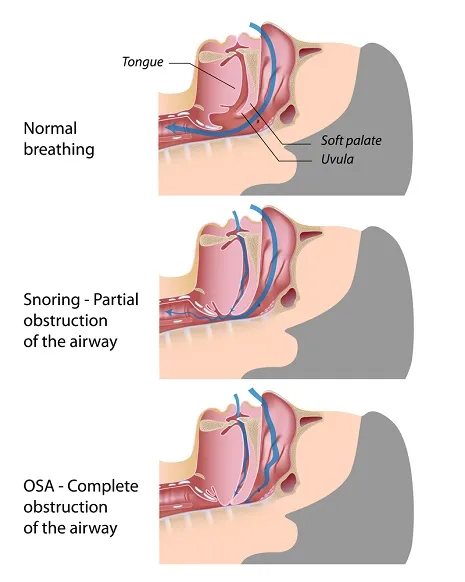
When you go to sleep, the tongue and the muscles at the back of the throat relax and fall back. When the tissues relax too much they can completely block the airway and stop the airflow: this is known as obstructive sleep apnea. During an apnea, your brain and heart do not get oxygen. Some patients can make a loud gasp, coughing or choking sound. This can happen many times throughout the night causing the person to wake up constantly and hindering the ability to rest.
Obstructive Sleep Apnea (OSA) interrupts your sleep and lowers the oxygen going to your body. People often feel tired and suffer from anxiety, depression, headaches, loss of concentration, increased risk of heart attack and stroke, Alzheimer’s and dementia. Untreated sleep apnea can shorten your life about 15 years and contribute to a poor quality of life for the patient and their family.
Women, men and children can all suffer from obstructive sleep apnea. Many times women and children can be overlooked and dismisses by many health professionals. They have the same risks and can greatly benefit from treatment to improve their quality of life.
What causes sleep apnea?
The exact cause of obstructive sleep apnea (OSA) is different for each person. Anyone can develop it, regardless of age or gender. The most common risk factors include:
- Having a large tongue or small jaw
- Enlarged tonsils and adenoids (particularly in children)
- Using some medicines, alcohol, marijuana products or sedatives which relax the muscles in the airway
- Nasal obstruction due to a deviated septum or sinus and allergy problems
- Having a large neck (over 17 inches in men, 16 inches for women)
- Being over 40 years old, however anyone from children to adults can develop OSA
- Being overweight – approximately half of OSA sufferers are overweight but many patients with a healthy weight can be affected by it
- Men are more prone than women to suffer from OSA, but after menopause, the risk for women increases and is the same as that for men
Oral Appliance Therapy and Epigenetic Appliances can be the first line of treatment for snoring and obstructive sleep apnea!
If you have any symptoms of snoring or sleep apnea call us to make an appointment with Dr. Rodriguez-Valle, our Dental Sleep Medicine specialist. We can get you tested to fully and accurately diagnose your sleep condition. Sleep studies can be completed at the comfort of your home or in a sleep lab. We will guide you through the process of getting tested and discuss the best treatment options.